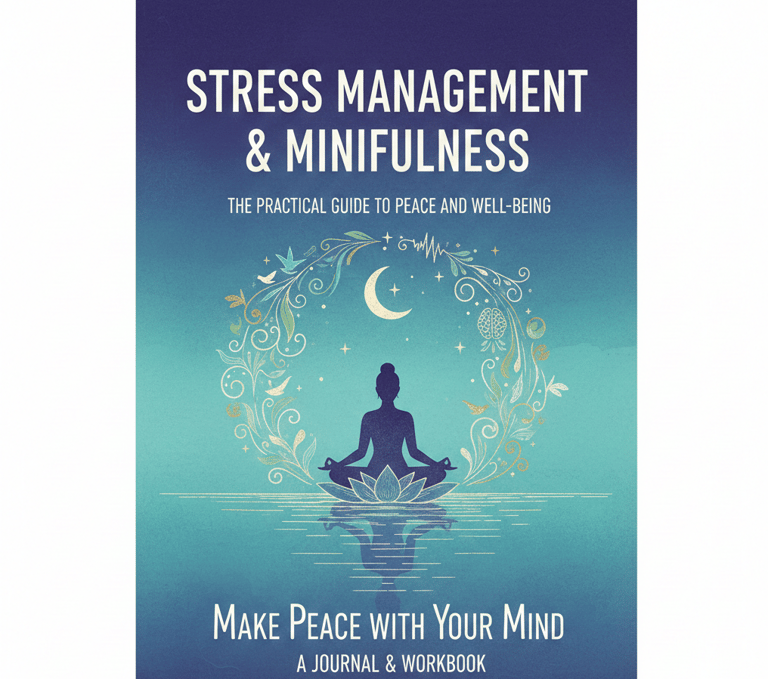
Stress Management & Mindfulness: A Practical Guide for a Calm Mind
Introduction
In today’s fast-paced world, stress is a normal part of life. But when stress becomes constant, it affects health, relationships, productivity, and emotional well-being. Mindfulness offers a simple, science-backed way to handle stress by training the mind to stay steady, aware, and calm.
This book teaches practical strategies to manage stress and build a more peaceful lifestyle.
Chapter 1: Understanding Stress
What is Stress?
Stress is the body’s natural response to perceived threats. It alerts us to danger, pushes us to act, and helps us adapt. However, prolonged stress can have negative effects.
Types of Stress
Acute Stress: Short-term and immediate (exam, meeting, interview)
Chronic Stress: Long-term and harmful (toxic work, unhealthy relationships)
Eustress: Positive stress that motivates (competition, deadlines)
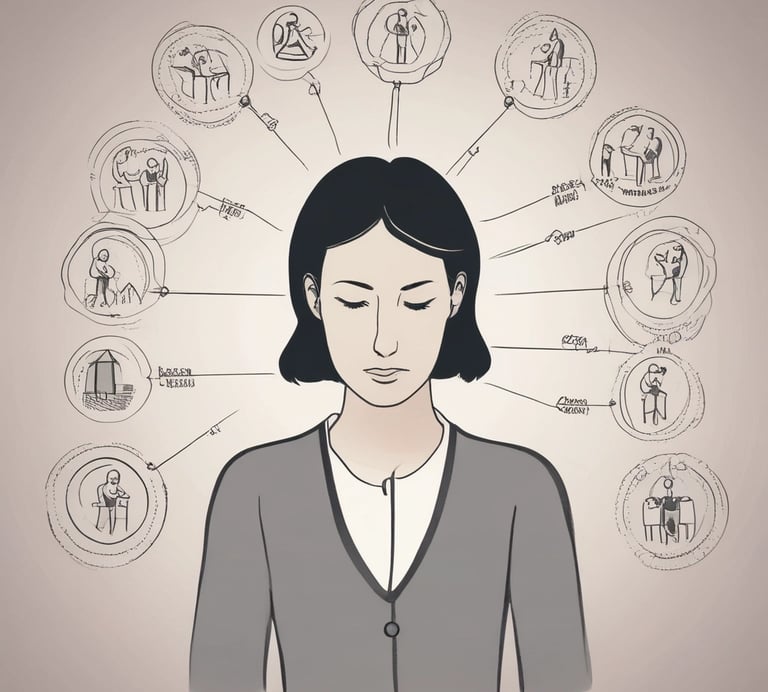
Common Causes
✔ Work pressure
✔ Financial problems
✔ Family responsibilities
✔ Social expectations
✔ Emotional trauma
✔ Lack of rest


Chapter 2: The Effects of Chronic Stress
Physical
Headaches
Insomnia
High blood pressure
Fatigue
Immunity decline
Emotional
Anxiety
Irritability
Mood swings
Brain fog
Feeling overwhelmed
Behavioral
Over-eating or loss of appetite
Withdrawal from people
Procrastination
Addictions (smoking, alcohol, shopping, scrolling)
Chapter 3: The Power of Mindfulness
Mindfulness Defined
Mindfulness means paying full attention to the present moment with acceptance—without judging or reacting.
Science Behind It
Research shows mindfulness:
✔ Lowers cortisol (stress hormone)
✔ Improves focus & clarity
✔ Increases emotional resilience
✔ Enhances body awareness
Chapter 4: Mindfulness Techniques for Daily Use
1. Breathing Awareness
Focus on slow inhales + slow exhales for 1–3 minutes.
2. Body Scan
Scan tension from head to toes to relax muscles.
3. Mindful Eating
Eat slowly, observe taste, smell, texture.
4. Mindful Walking
Walk and notice sensations, rhythm, and surroundings.
5. Mindful Listening
Listen without interrupting or mentally reacting.
Chapter 5: Stress Management Strategies
Strategy 1: Create Boundaries
Say no to unnecessary obligations.
Strategy 2: Declutter Your Schedule
Identify energy drains vs. energy boosts.
Strategy 3: Sleep Hygiene
Rest resets the nervous system.
Strategy 4: Physical Movement
Yoga, stretching, walking, or simple exercise reduces anxiety.
Strategy 5: Breathing Techniques
Easiest and most instant stress reliever.
Chapter 6: Gratitude & Positive Mind Reset
Gratitude trains the brain to shift from scarcity to abundance.
Daily Gratitude Practice
Write:
3 things you are grateful for
1 positive memory from today
1 intention for tomorrow
Chapter 7: Digital Mindfulness
Too much screen time = constant stress signaling.
Tips:
✔ Set screen limits
✔ Avoid phones before sleep
✔ Reduce doom-scrolling
✔ Keep “digital Sabbath” once a week
Chapter 8: Emotional Regulation & Self-Compassion
Mindfulness helps us:
Name emotions
Sit with discomfort
Respond vs. react
Self-Compassion Reminder
“You are a human being. You are learning. You are allowed to rest.”
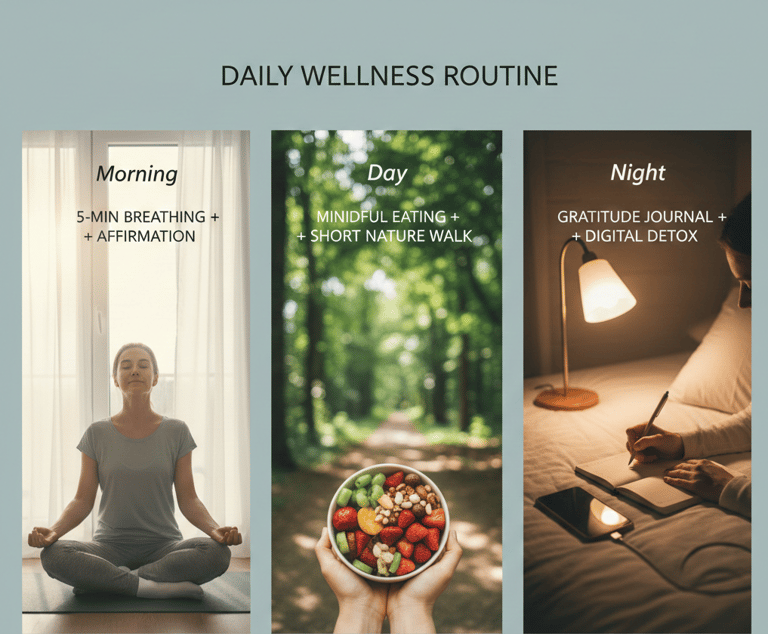
Chapter 9: Mindful Living Routine
Sample Daily Routine:
Morning: 5-min breathing + affirmation
Day: mindful eating + short nature walk
Night: gratitude journal + digital detox
Chapter 10: Long-Term Benefits
With consistent practice:
✔ Lower anxiety
✔ Better mental clarity
✔ Slower emotional reactions
✔ Improved relationships
✔ Higher productivity
✔ More peace & joy
Conclusion
Stress doesn’t disappear, but how we respond can transform. Mindfulness empowers us to live consciously, compassionately, and calmly.